🍪
Can we use cookies?
Technical cookies are needed for the site to work. We only use statistics and profiling cookies if you accept them. The details are in our cookie policy and our privacy policy.
When it leaves the mill, why it is more bitter and peppery, cloudy oil and sediment, and how to enjoy it raw.
In short
New season oil is oil fresh from the mill. In Abruzzo it arrives between October and December, when the olives are picked and milled. It is greener, more bitter and more peppery because it is full of polyphenols, which fade over the months. That intensity lasts a few months, then the oil mellows. The best way to taste it is raw, on a slice of toasted bread.
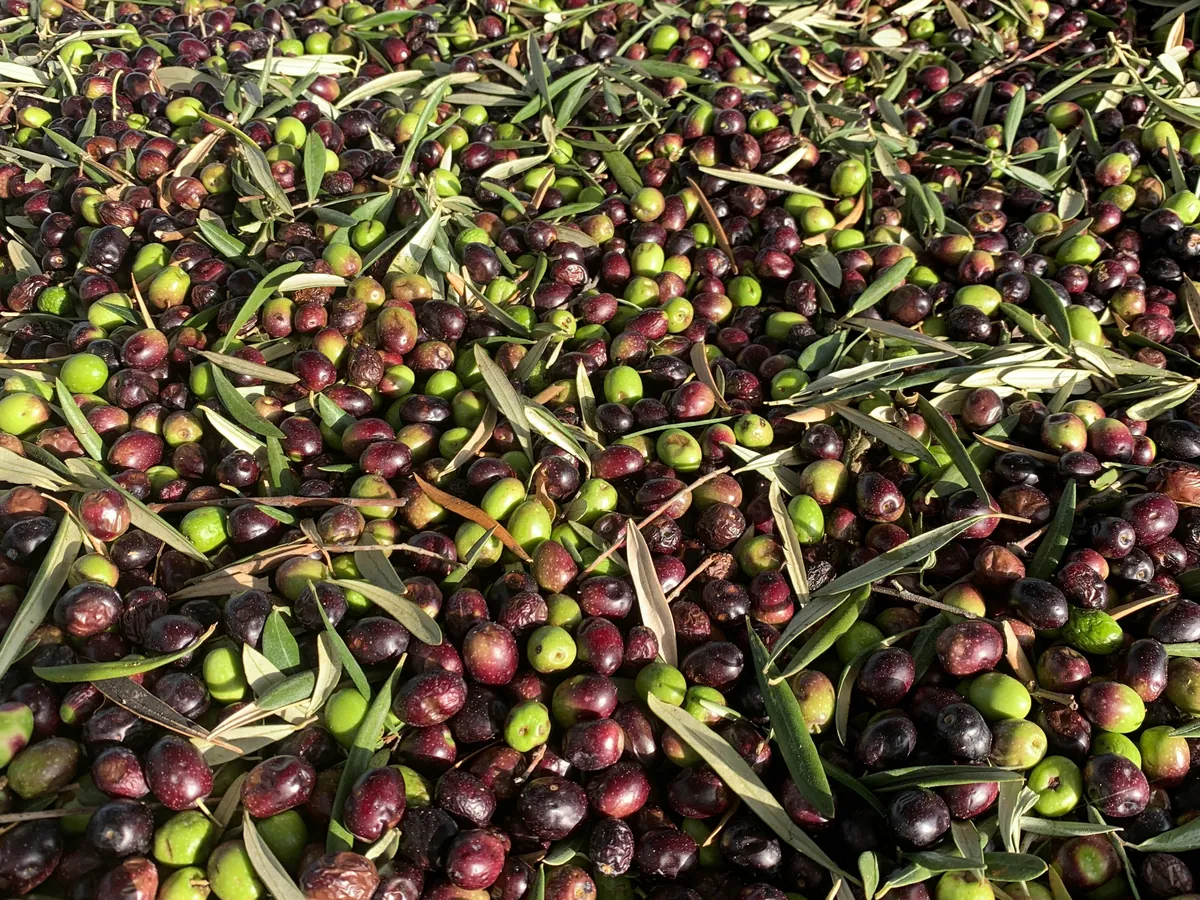
Olives are picked in autumn and taken to the mill within a few days, ideally within a few hours. In Abruzzo picking and milling usually run from October to December. The exact timing changes every year, with the weather and the olive variety. Olives picked early are greener. They give less oil, but it is more aromatic and more peppery.
In Italy it is called olio nuovo or olio novello. The law does not treat it as a separate category, and the name only tells you the oil has just been made.
The bitterness and the peppery sting come from polyphenols, substances that pass from the olives into the oil and protect it from oxidation. Freshly milled oil has more of them, so it stings more. The bright green colour comes from the chlorophyll in early-picked olives, and that fades over time too.
People who are not used to it sometimes think it is a fault. Official tasters count bitterness and pungency as qualities, as we explain in the article on cold pressed olive oil.
Oil straight from the mill is often cloudy. It carries tiny drops of water and bits of olive flesh. Some producers filter it right away and the oil turns clear, others sell it as it is, unfiltered.
In unfiltered oil those particles slowly sink over the weeks and form a sediment. It is not a fault, but sediment left there for a long time can ferment and spoil the taste. So unfiltered oil should be used sooner, or decanted leaving the sediment behind.
The strongest bitterness and pungency are there in the first two or three months. Then the oil becomes rounder, and by spring it tastes more balanced. Stored well it stays good for a long time, but the taste of just-made oil only comes back with the next harvest.
Raw, where you can taste it. The classic test is bruschetta, with toasted country bread, a clove of garlic rubbed over it, salt and a generous drizzle of oil. It also works on beans and lentils, vegetable soups, cooked greens and boiled potatoes.
You can cook with it, but heat takes away the most aromatic part. For frying, use your everyday oil, and the article on frying with extra virgin olive oil has temperatures and tips.
Like any extra virgin, in the dark, somewhere cool between 12 and 18 °C, tightly closed. If it is cloudy, leave it still so the sediment settles, and when you decant it leave the last finger of oil in the container. The rest is in the article on how to store olive oil in a tin.
If you want to try ours, we can send you a 200 ml sample and you only pay for shipping. The 3, 5, 10 and 20 litre tins are in the catalogue.